
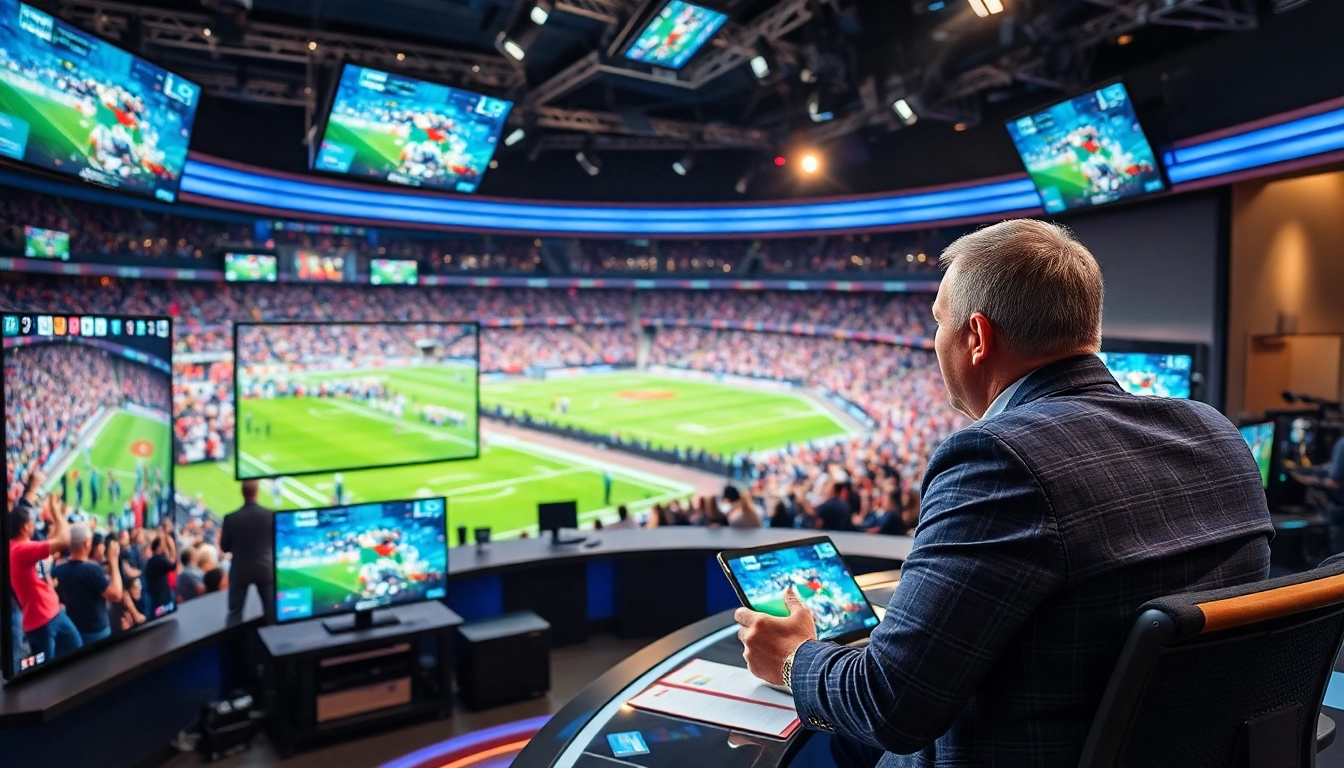
Understanding Sports Broadcasting
What Is Sports Broadcasting?
Sports broadcasting refers to the live coverage of sports events, providing viewers with play-by-play commentary, analysis, and various enhancements to enrich the viewer experience. Over the years, this domain has expanded beyond traditional television, incorporating radio, streaming services, and digital platforms to reach a broader audience. As an essential facet of the entertainment industry, Sports Broadcasting serves both fans and sports organizations by promoting competitions and athletes while generating significant revenue.
The Evolution of Sports Broadcasting
Sports broadcasting has undergone a remarkable transformation since its inception in the early 20th century. The initial radio broadcasts brought sports into households, allowing audiences to engage with games remotely. As technology advanced, television became the dominant medium in the 1950s, introducing visuals alongside commentary. The rise of cable networks in the 1980s further revolutionized access, resulting in dedicated sports channels that offered 24-hour coverage.
Today, with the advent of the internet and fast connections, streaming services have reshaped the landscape yet again, allowing fans to view events on multiple devices and even providing interactive features.
Types of Sports Broadcasting
Sports broadcasting can mainly be categorized into four types:
- Television Broadcasting: Traditional broadcasts through cable, satellite, and digital TV.
- Radio Broadcasting: Audio coverage which remains popular, delivering game commentary and analysis.
- Online Streaming: Live streaming over the internet through platforms like YouTube and dedicated apps.
- Social Media Broadcasting: Platforms like Twitter and Facebook allow for a new way of sharing highlights and commentary in real-time.
Key Components of Sports Broadcasting
Equipment and Technology in Sports Broadcasting
The backbone of any successful sports broadcast lies in its equipment and technology. High-definition cameras, multiple camera angles, and drones capture diverse perspectives of an event. Advanced audio equipment ensures clarity in commentary and crowd noise, creating an immersive experience for viewers. Furthermore, graphics and data analytics systems enhance live broadcasts by providing real-time stats, player bios, and more, allowing fans to engage deeply with the game.
Role of Commentary and Analysis
Commentary adds depth to sports broadcasts, guiding fans through the highs and lows of a game. Expert analysts contribute insights that elevate the viewing experience. Great sports commentators can narrate the game’s play while connecting historical contexts or player statistics, making the broadcast not just about the game but also about its significance. Good chemistry between commentators can also enhance viewer enjoyment.
Production Techniques for Live Sports Broadcasting
Effective production techniques are crucial for engaging viewers. Key elements include the placement of cameras, lighting adjustments, and the coordination of live feeds. Producing pre-game and half-time shows adds further value, featuring interviews, analysis, and fan interactions. Moreover, post-production work contributes to highlights and recap shows, ensuring that memorable moments are captured and shared online.
Challenges in Sports Broadcasting
Adapting to Technological Changes
Technological advancements pose both opportunities and challenges for sports broadcasters. For example, the shift from traditional broadcasting to online streaming requires broadcasters to invest in new platforms and familiarize their teams with emerging technologies. Staying updated with trends and embracing mobile accessibility are vital for reaching younger audiences who prefer content on their devices.
Meeting Viewer Expectations
In a competitive landscape, viewer expectations have never been higher. Audiences demand high-quality production, engaging commentary, and interactive elements. Failure to meet these standards can lead to viewer disengagement and loss of audiences to competitors. Continuous feedback loops and audience analytics can help broadcasters understand and adapt to viewer preferences.
Regulatory Challenges in Sports Broadcasting
Legal and regulatory issues often create hurdles for broadcasters, particularly regarding broadcasting rights, specific content restrictions, and cross-border transmission rules. These legal frameworks can vary tremendously across regions, requiring thorough understanding and compliance to avoid penalties and ensure seamless broadcasting of sporting events.
The Future of Sports Broadcasting
Emerging Trends and Technologies
The sports broadcasting industry is on the cusp of further evolution, driven by emerging trends such as augmented reality (AR) and virtual reality (VR). These technologies provide innovative viewing experiences by allowing fans to experience games from various angles or even virtually in the same space as players. Additionally, artificial intelligence (AI) is being used for content creation, data analysis, and enhancing personalization of viewing experiences.
Impact of Streaming Services on Sports Broadcasting
Streaming services have disrupted traditional sports broadcasting models, providing flexibility and numerous viewing options for consumers. Services like ESPN+ and DAZN have begun to secure exclusive rights for certain sports, which increases competition among networks. This shift not only influences the way fans consume content but also drives traditional broadcasters to innovate to remain relevant.
Predictions for the Next Decade in Sports Broadcasting
As we look ahead, the sports broadcasting landscape will likely continue to embrace integration with smart technology, creating interactive experiences that allow fans to personalize their viewing. Data analytics will become integral, providing insights not just for broadcasters but for the audience, enhancing engagement and comprehension. Additionally, collaboratives between sports leagues and tech companies will lead to further innovations that could reshape the consumer experience.
Frequently Asked Questions about Sports Broadcasting
What careers are available in sports broadcasting?
Careers in sports broadcasting include sports commentators, producers, and audio/visual technicians. Opportunities also exist in journalism, public relations, and social media management within sports networks.
How has technology changed sports broadcasting?
Technology has revolutionized sports broadcasting by enabling high-definition video, interactive graphics, and instant replays. Streaming services allow fans to watch events on-demand across devices, enhancing accessibility.
What makes a successful sports broadcaster?
Successful sports broadcasters possess strong communication skills, in-depth knowledge of the sport, and the ability to engage and entertain an audience. They also stay updated with current events and trends.
How do rights deals impact sports broadcasting?
Rights deals determine which networks can broadcast specific sports events, directly impacting viewership and revenue. Exclusive rights can create significant competition among networks to attract higher audiences.
What are common challenges faced in sports broadcasting?
Common challenges include rapidly changing technology, meeting escalating audience expectations, and navigating legal regulations. These factors require constant adaptation and foresight from broadcasters.